
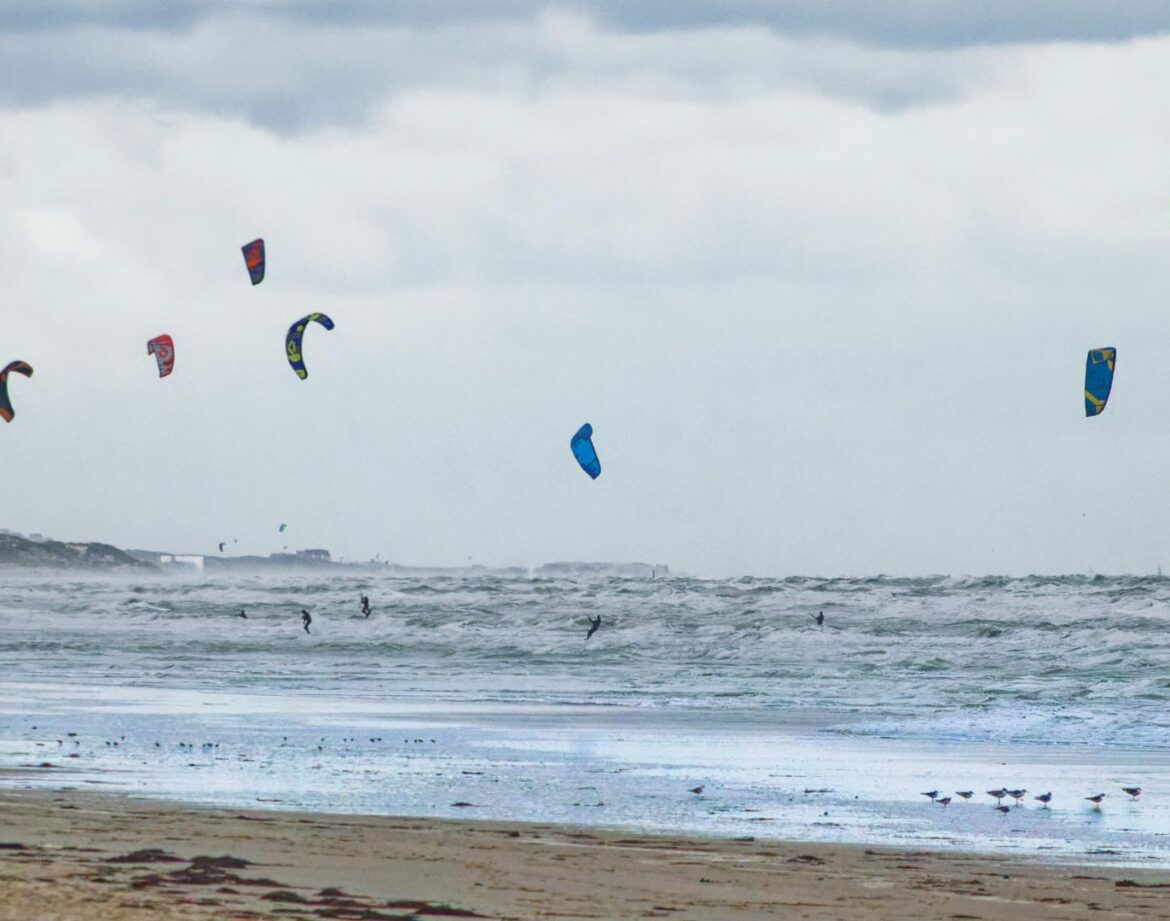
Kitesurfing at Keros and Ftelia Beach
The meltemi doesn’t ask permission. It arrives in June and it stays through September, a steady, reliable force out of the north that has shaped life in the Cyclades for as long as people have lived here — filling the sails of ancient trading vessels, scattering the summer heat, keeping the mosquitoes away. For most visitors it is simply the wind, the thing that tugs at a beach umbrella or makes a harbour-side dinner slightly more dramatic than planned. For kitesurfers, it is the entire reason to come.
Ftelia beach on the island’s north coast is ground zero. A long, exposed arc of coarse sand and low dunes that faces the open sea with nothing to interrupt the fetch, it catches the northern wind with almost mechanical consistency. The geography here is ideal in a way that takes a moment to fully appreciate: a shallow lagoon section sits behind a natural sandbar, offering flat water and forgiving conditions for beginners and intermediate riders working on technique, while the open sea beyond the bar delivers the chop and the power that experienced riders come specifically to find. On a good meltemi day — sustained at twenty to twenty-five knots, building through the afternoon — the water off Ftelia is alive with kites. Dozens of them, at all heights and angles, moving in that particular organised chaos that the sport produces when conditions are right and everyone on the water knows what they’re doing.
Several schools operate directly on the beach, their banners staked into the sand alongside racks of boards and coils of lines. The instruction is almost universally good — kitesurfing schools on Mykonos have been running for long enough that the teaching methods are refined, the safety protocols are taken seriously, and the instructors have seen every kind of beginner. A standard introductory lesson runs two to three hours and begins entirely on land. You spend longer than you expect learning to fly the kite in the power zone, understanding how it generates pull, how to depower it instantly if something goes wrong. This is not the impatient part of the lesson — it is the essential part. The water comes later, and when it does, the groundwork makes the difference between someone who stands up on the first session and someone who spends an hour being dragged face-first through the shallows.
Experienced riders tend to arrive early, launching by 10 or 11am before the meltemi reaches its afternoon peak and the conditions shift from exhilarating to demanding. The crowd at Ftelia is international in the way that serious wind sports crowds always are — people who have travelled specifically for these conditions, who have kited in Tarifa and Cabarete and Zanzibar and are here because the Aegean offers something those places don’t, a combination of reliable wind, warm clear water, and an island that happens to be one of the most beautiful places in the Mediterranean to spend the hours between sessions. Nobody is precious about space or technique. There is a particular democracy to wind sports that levels things out — conditions humiliate everyone eventually, and shared humiliation is a reliable social lubricant.
Keros beach, a short drive east along the northern coast, draws more windsurfers than kiters, the long shore break and a slightly different wind angle suiting the longer boards and the different physical grammar of that sport. The two beaches between them constitute one of the best wind sports destinations in Greece, which is saying something in a country that has no shortage of wind and water. Equipment rental runs around €50–80 for a half day. Lessons start at around €80 for the introductory session and drop in price per hour across a multi-day course. If the wind is up and you have never tried either sport, booking a two-hour intro lesson is one of the most immediately visceral things you can do on the island. Nothing else — not the beach clubs, not the sunsets from Little Venice, not the cocktails at Scorpios — puts the scale and the power of the Aegean quite so immediately and physically in your face. The wind doesn’t care who you are. That, after a few days on Mykonos, can feel like exactly the right thing.